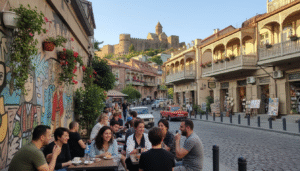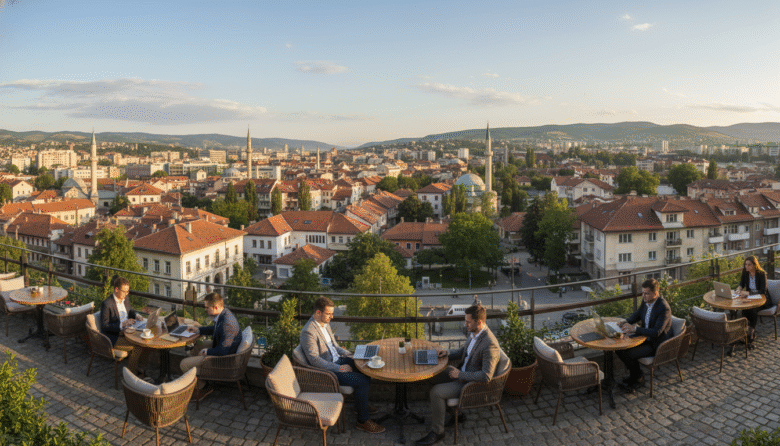
Sarajevo stands as Bosnia and Herzegovina’s capital, a city where history and culture create a unique atmosphere. Nestled in a valley surrounded by the Dinaric Alps, this destination blends Ottoman, Austro-Hungarian, and Yugoslav influences. The result is a living environment where Eastern and Western traditions converge beautifully.
For professionals working online, understanding the true cost living in this city is essential. This guide provides current information to help establish realistic budget expectations. You’ll discover how far your income can stretch in this historically rich location.
Our analysis draws on reliable data from multiple sources to present accurate pricing. This comprehensive look at monthly expenses covers housing, food, transportation, and utilities. The city offers excellent value compared to more expensive European destinations.
Digital nomads will find adequate Wi-Fi speeds and various accommodation options. The welcoming atmosphere makes settling in straightforward. This introduction sets the stage for detailed breakdowns of specific expense categories.
Key Takeaways
- Sarajevo combines affordability with rich cultural and historical significance
- The city offers adequate digital infrastructure for online professionals
- Understanding the true cost living helps with financial planning
- Current data provides accurate pricing across major expense categories
- The location represents strong value compared to other European cities
- Monthly expenses vary based on lifestyle choices and accommodation preferences
- The city’s unique East-meets-West atmosphere enhances the living experience
Exploring Sarajevo’s Unique Appeal for Remote Workers
Bosnia Herzegovina’s principal city serves as a living museum where Ottoman, Austro-Hungarian, and Yugoslav legacies converge. This creates an environment unlike any other European destination.
Historical and Cultural Highlights
The capital of Bosnia Herzegovina boasts remarkable sites that tell stories of different eras. The Ottoman-era Bascarsija bazaar remains a vibrant center of commerce and culture.
Architectural treasures from the Austro-Hungarian period line the city streets. Religious diversity is visible with mosques, churches, and synagogues standing close together.
Why Remote Workers Choose Sarajevo
People selecting this city appreciate its authentic character. Daily life maintains a genuine local feel without overwhelming tourist crowds.
Accommodation options blend historical charm with modern comforts. Living in Bosnia Herzegovina provides excellent value compared to neighboring countries.
The surrounding Dinaric Alps offer perfect day trip opportunities. Outdoor enthusiasts find hiking and winter sports easily accessible.
| Feature | Sarajevo | Other European Cities | Advantage |
|---|---|---|---|
| Cultural Authenticity | High | Variable | Strong local character |
| Cost of Living | Affordable | Generally higher | Better value |
| Historical Depth | Rich layers | Often singular | Diverse influences |
| Natural Access | Immediate | Often distant | Mountain proximity |
Cost of Living Overview in Sarajevo
A key component of the cost of living is the price of daily necessities, and Sarajevo’s markets offer significant savings. The overall cost is a fraction of what you find in Western European capitals. This makes budget management straightforward for digital professionals.
Current data shows stable prices across essential categories. This predictability is a major advantage for financial planning.
Local Market Prices and Daily Essentials
Self-catering is an extremely affordable option. Staple items are reasonably priced, allowing for a healthy and varied diet without high food costs.
Here are sample prices for common goods:
- Milk (1 liter): ~2.24 KM
- Fresh Bread (1 lb): ~1.77 KM
- Eggs (12): ~4.74 KM
- Domestic Beer (16.9 oz bottle): ~1.62 KM
Protein like chicken and beef is also reasonably priced. A bottle of mid-range wine averages 13.26 KM. These costs contribute to a high quality of life on a modest budget.
Restaurant and Transportation Costs
Dining out is accessible for all budgets. A meal at an inexpensive restaurant costs about 12.50 KM per person.
A three-course meal for two at a mid-range place is around 60.00 KM. Getting around the city is also cost-effective.
A single public transport ticket is 2.20 KM. A monthly pass is 60.00 KM. For drivers, gasoline is approximately 2.53 KM per liter.
These low transportation costs make exploring the city and surrounding areas easy.
Monthly Expenses Sarajevo Remote Workers: Detailed Breakdown
Understanding the financial commitment required for daily life helps digital professionals make informed relocation decisions. This analysis provides a transparent view of where money goes in this affordable European destination.
Food and Beverage Costs
Grocery shopping remains remarkably affordable. A liter of milk costs 2.24 KM while rice is 1.52 KM per pound.
Fresh produce like tomatoes at 1.47 KM per pound and potatoes at 0.82 KM keep food budgets manageable. Beverages add minimal expense with bottled water at 1.30 KM per 50 oz bottle.
Rent, Utilities, and Accommodation
Housing represents the largest financial outlay. A one-bedroom apartment in the city centre averages 598.39 KM.
Moving outside the centre reduces this cost to approximately 433.67 KM. Utilities including electricity, heating, and water average 287.55 KM for standard accommodation.
Transport and Miscellaneous Expenses
Getting around the city is cost-effective. A monthly public transport pass costs 60.00 KM.
For those who drive, gasoline is approximately 2.53 KM per liter. Essential connectivity like broadband internet averages 48.95 KM monthly.
These reasonable rates contribute to the city’s exceptional value proposition for location-independent professionals.
Lifestyle and Convenience: Food, Transport, and Utilities
The practical aspects of day-to-day living, from meals to mobility, contribute significantly to the city’s appeal. Affordable options make enjoying local culture straightforward.
Dining Out and Local Markets
Eating well is both easy and budget-friendly. A satisfying meal at a local restaurant costs about 12.50 KM per person.
For a special evening, a three-course dinner for two averages 60.00 KM. Enjoying a pint of domestic beer with your meal adds only around 4.00 KM.
Local markets offer fresh ingredients for home cooking. A pound of bread is roughly 1.77 KM. Chicken and local cheese are also reasonably priced.
Buying a bottle of wine for home costs approximately 13.26 KM. This supports a high quality of life without high spending.
Public Transport and Taxi Rates
Getting around the city is efficient and cost-effective. A single public transport ticket is 2.20 KM.
A monthly pass offers even better value at 60.00 KM. This makes exploring different neighborhoods simple.
Taxi services use a clear tariff system. The starting fare is 2.50 KM, with each mile costing about 2.41 KM.
This is ideal for late-night travel or reaching areas beyond bus routes. For those considering a car, a new Volkswagen Golf costs around 53,300.00 KM.
Fuel is priced at 2.53 KM per liter. The table below compares these options.
| Transport Method | Typical Cost | Convenience Level | Best For |
|---|---|---|---|
| Public Transport | 2.20 KM per ticket | High (city-wide) | Daily commuting |
| Taxi | 2.50 KM start + 2.41 KM/mile | Very High (on-demand) | Specific trips, late night |
| Car Ownership | ~53,300 KM (new compact car) | Maximum (personal) | Frequent travel outside city |
Summer days are perfect for enjoying outdoor cafés. A cappuccino averages 2.88 KM. Leisure activities like cinema tickets cost about 10.00 KM per person.
Workspace, Connectivity, and Local Business Environment
Connectivity and workspace facilities form the backbone of any successful remote work arrangement. The city provides robust infrastructure for digital professionals.
Reliable Internet and Mobile Plans
High-speed broadband packages deliver 60 mbps or faster speeds. This ensures smooth video calls and file transfers. The average cost is 48.95 KM for unlimited data.
Mobile plans with 10GB+ data average 30.85 KM. This provides flexible connectivity options. Network reliability supports essential business operations.
The local infrastructure has improved significantly in recent years. Most residential accommodation now offers professional-grade connections. This meets demanding work requirements.
Co-working Spaces and Remote Work Facilities
Shared workspaces serve the growing population of digital professionals. They offer dedicated desks and meeting rooms. Membership rates are below European business hubs.
Many facilities include utilities in their fees. This covers electricity for equipment and heating during work sessions. Members enjoy predictable costs.
The local business environment welcomes international professionals. Service providers show growing understanding of digital nomad needs. This creates a supportive ecosystem.
The cost living advantage extends to workspace expenses. Connectivity represents a smaller budget percentage than Western markets. Similar mbps speeds command premium rates elsewhere.
Conclusion
Living costs in Bosnia Herzegovina create opportunities that are increasingly rare elsewhere. The comprehensive information provided demonstrates this city’s exceptional value among European destinations.
People choosing this location enjoy 40-60% lower costs than Western alternatives. This significant saving occurs while maintaining excellent connectivity and quality of life standards.
The data reveals that comfortable living is achievable within reasonable budget parameters. Rent and utilities represent the largest portions, while food and transport remain remarkably affordable.
Compared to other countries, living Bosnia Herzegovina offers financial advantages that extend beyond simple economics. The authentic cultural experience creates a richer lifestyle than many more expensive cities provide.
This guide equips prospective residents with current information for informed decisions. The combination of affordable cost living and genuine community atmosphere makes this a compelling choice for meaningful experiences.