Choosing between Thailand’s two most popular destinations requires careful consideration of lifestyle priorities and financial realities. This comprehensive guide examines how your money works differently in each location.
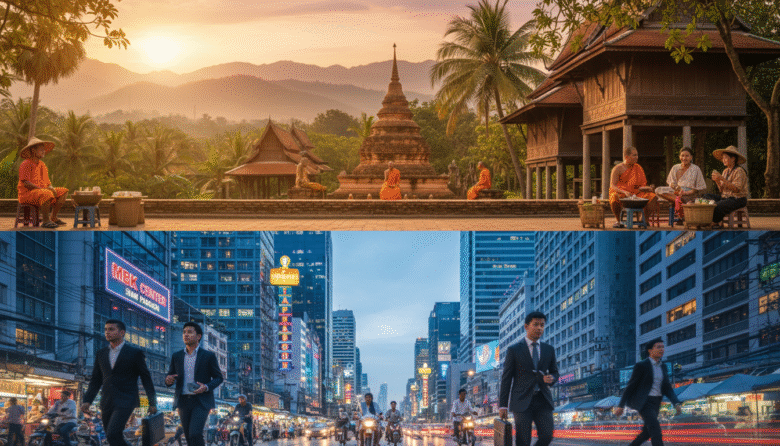
These urban centers represent contrasting approaches to Southeast Asian life. One offers mountain tranquility and cultural immersion, while the other provides metropolitan energy with global amenities.
Your monthly earnings determine available space, leisure opportunities, and overall satisfaction. Whether working remotely or planning an extended stay, understanding daily expenses is crucial.
We analyze housing markets, food prices, transportation systems, and entertainment options. Our data comes from current pricing information and firsthand expat experiences.
Both locations attract international communities but serve different needs. The choice impacts your quality of life significantly when working with a fixed income.
Key Takeaways
- Chiang Mai typically offers lower housing costs and daily expenses than Bangkok
- Bangkok provides superior public transportation and international amenities
- Monthly budgets between $1,500-$3,000 afford different lifestyles in each city
- Chiang Mai appeals to those seeking nature and creative communities
- Bangkok attracts professionals wanting career opportunities and urban convenience
- Food and entertainment costs vary significantly between the two locations
- Your personal priorities determine which city offers better value
Introduction
For those considering a move to this Southeast Asian nation, the contrast between its two main urban centers is stark and defining. Thailand continues to attract a large number of expats annually. The northern and southern hubs serve as primary bases for these international communities.
This decision involves weighing cultural richness against urban convenience. It requires looking beyond anecdotes to reliable information. Our analysis uses data from property portals, expat reports, and local business sources.
This provides accurate cost estimates for 2025-2026. Understanding true expenses means examining different lifestyle tiers.
Each location offers distinct advantages. One provides immersion and lower costs. The other delivers metropolitan amenities and extensive services.
Your final choice impacts monthly expenses, social opportunities, and access to services significantly. This guide offers a detailed breakdown. We cover housing, food, transportation, and entertainment to give you a clear picture.
Living in Chiang Mai vs Bangkok Budget
Examining the required monthly outlays offers the clearest comparison for those on a fixed income. The gap in living expenses is significant and impacts daily life.
For basic accommodations and local food, a frugal budget starts around 28,000 baht ($780 usd) per month in the north. The capital requires at least 33,000 baht ($920 usd), a 15% difference.
The middle tier shows a wider gap. A comfortable lifestyle needs about 52,000 baht compared to 65,000 baht in the metropolitan hub. This represents a 25% higher income requirement for a similar quality of life.
Housing prices and lifestyle temptations are the primary drivers. The larger city’s extensive entertainment and dining scene creates more spending opportunities.
These estimates are for single adults. A comfortable existence without financial stress is achievable on 35,000-40,000 baht per month in one city, while the other typically requires closer to 50,000 baht.
Overall Cost of Living Breakdown
The total financial commitment extends far beyond housing and dining to include many hidden factors. Your complete monthly expenses encompass utilities, transportation, healthcare, and entertainment.
Basic utility cost averages around 5,247 baht monthly. This varies significantly between locations and consumption levels. The northern city consistently offers lower overall cost living across all categories.
Total monthly expenses reveal stark contrasts. One urban center ranges from 28,000 to 115,000 baht. The capital requires 33,000 to 150,000 baht for comparable tiers.
| Lifestyle Tier | Northern City Range | Capital City Range |
|---|---|---|
| Budget | 28,000-45,000 baht | 33,000-55,000 baht |
| Comfortable | 52,000-80,000 baht | 65,000-100,000 baht |
| Luxury | 85,000-115,000 baht | 110,000-150,000 baht |
The price gap widens significantly in premium tiers. Upscale services and international dining command higher prices in the metropolitan area. Both cities offer local lifestyle options that reduce cost substantially.
Seasonal fluctuations affect short-term visitors more than residents with annual leases. Understanding your personal spending patterns is crucial for accurate cost living thailand estimates.
Remember to factor in additional expenses like visa fees and health insurance. These can add $1,000-$4,000 usd annually to your total cost living calculations.
Housing, Rent, and Utilities Comparison
Accommodation expenses represent one of the most significant differences between Thailand’s urban centers. The northern city offers more affordable options across all housing categories.
Chiang Mai Rental Market and Housing Prices
Properties in the northern region provide excellent value. A modern studio apartment typically starts around 8,000 baht ($225 USD) per month.
One-bedroom units range from 12,000-18,000 baht ($340-510 USD). Larger houses with gardens offer spacious alternatives at reasonable prices.
Bangkok Condo and Apartment Costs
The capital’s metropolitan status drives higher accommodation costs. Studio apartments near transit stations begin at 15,000 baht ($425 USD) monthly.
Basic one-room units start from 10,000 baht ($285 USD). Premium locations command significantly higher rates.
| Housing Type | Northern City Range | Capital City Range |
|---|---|---|
| Studio Apartment | 8,000-12,000 baht | 15,000-25,000 baht |
| 1-Bedroom Unit | 12,000-18,000 baht | 18,000-35,000 baht |
| House Rental | 20,000-40,000 baht | 50,000-100,000+ baht |
Utility expenses also vary considerably. Total monthly utility costs typically range 2,000-3,500 baht in the north compared to 3,100-5,200 baht in the capital.
Electricity represents the largest portion due to climate differences. Internet and water services complete the utility package.
Food, Dining, and Street Food Culture
From street-side vendors to upscale restaurants, food culture provides unique insights into each city’s character. The culinary landscape differs significantly between these destinations.
Both locations offer excellent value for money. However, the variety and pricing structures vary considerably.
Affordable Eats and Local Delicacies in Chiang Mai
Northern cuisine features distinctive flavors and affordable pricing. Street vendors serve delicious meals starting around 25-80 baht ($0.70-$2.25 USD).
Local markets provide fresh ingredients and prepared dishes. The food scene emphasizes traditional recipes and community dining experiences.
Diverse Dining and Street Food in Bangkok
The capital’s street food ranges from 30-100 baht ($0.85-$3 USD) per meal. This pricing reflects incredible diversity from all Thai regions.
Mid-range restaurants charge 200-500 baht ($6-$15 USD) for excellent quality. The competitive dining scene delivers outstanding value.
Food courts in malls like Terminal 21 offer air-conditioned comfort. They serve Thai meals for 50-100 baht, providing relief from street heat.
Daily food expenses typically range 600-1,000 baht ($17-$30 USD) for expats. This includes mixed Thai and Western dining options.
Nightlife, Entertainment, and Social Scene
When the sun sets, Thailand’s urban centers reveal dramatically different personalities through their entertainment offerings. The contrast between evening atmospheres highlights fundamental lifestyle choices for residents and visitors.
Each location caters to distinct preferences and social circles. Your entertainment budget stretches differently depending on which city you choose.
Relaxed Evenings in Chiang Mai
The northern city offers a more subdued night scene. Expats enjoy casual gatherings at local pubs and live music venues.
Evenings often involve exploring night markets or quiet cafes. The pace is slower and more community-focused.
Vibrant Clubs and Rooftop Bars in Bangkok
The capital’s nightlife surpasses all expectations with endless options. From RCA’s massive clubs to sophisticated rooftop lounges, there’s always something happening.
World-class venues like Sky Bar offer premium experiences with stunning city views. The diverse expat community finds plenty of places to socialize.
Entertainment spending can reach 2,000-5,000 baht per night in premium spots. This makes nightlife a significant consideration for your monthly expenses.
Transportation and Public Transit Options
Getting around efficiently and affordably is a major factor in choosing between Thailand’s urban hubs. The available systems differ greatly in scale, cost, and convenience.
Your daily commute and exploration needs will shape your experience. One city relies on informal local solutions, while the other boasts a world-class network.
Chiang Mai’s Motorbike and Songthaew Experiences
Personal mobility is often the best solution in the northern city. Renting a motorbike provides ultimate freedom for a low monthly cost.
Shared red trucks, called songthaews, offer flexible route access for about 30 baht per trip. This informal public transport system is budget-friendly but less predictable.
Efficient BTS Skytrain and MRT in Bangkok
The capital’s rail systems provide a fast escape from street-level congestion. The BTS Skytrain and MRT subway form an integrated network across the metropolis.
Fares range from 15 to 52 baht, making regular use affordable. Many residents choose apartments near stations for easy access.
This strategic location often saves more on transportation costs than the added rent premium. It eliminates the need for a personal vehicle.
| Transport Mode | Fare Range (Baht) | Best For |
|---|---|---|
| BTS Skytrain | 15-52 | Fast cross-city travel |
| MRT Subway | 16-42 | Reaching central areas |
| Bus | 8-30 | Budget short trips |
| Taxi | 35+ | Convenient door-to-door |
Monthly transportation costs for this efficient public transport average around 2,000 baht. This system makes car ownership unnecessary for most urban dwellers.
Weather and Seasonal Considerations
The atmospheric conditions in these urban environments shape lifestyle choices throughout the year. Climate differences impact everything from electricity bills to social activities.
Each location presents unique seasonal challenges that affect daily routines. Understanding these patterns helps residents prepare for changing conditions.
Climate Patterns and “Burning Season”
The northern region experiences distinct seasonal variations. Cooler evenings provide relief during winter months.
Agricultural burning creates seasonal air quality issues. This period requires adjusted outdoor activities.
Hotter Urban Climate and Seasonal Shifts
The metropolitan area maintains consistently high temperatures year-round. The urban heat island effect creates warmer conditions.
Most activities occur indoors with air conditioning. This reduces direct exposure to extreme heat.
Hot season brings challenges for evening social events. Formal attire becomes uncomfortable in 35+ Celsius temperatures.
Rainy season downpours can disrupt street-level transportation. The rail systems continue operating normally during these periods.
Electricity costs remain high due to constant climate control needs. The city lifestyle involves limited outdoor time compared to other locations.
Location, Accessibility, and Surrounding Attractions
Your geographic priorities—whether you crave mountain serenity or regional connectivity—largely dictate which Thai city suits you best. The surrounding areas and travel options differ dramatically.
The northern hub is nestled among beautiful countryside and rice farms. This creates a stunning backdrop but also a sense of isolation from the rest of the country.
Weekend trips by motorbike reveal incredible places like Pai and Chiang Rai. This offers cultural experiences unique to the region.
However, international travel requires a connecting flight to the capital. This adds time and expense to overseas journeys.
In contrast, the central hub provides easy access to beach destinations. You can reach Hua Hin or Pattaya by road in a few hours.
Suvarnabhumi International Airport offers direct flights worldwide. This makes the city ideal for frequent travelers.
The choice is clear: deep cultural immersion or a gateway to Southeast Asia. Your preference for exploration defines the better option.
| Travel Aspect | Northern City | Capital City |
|---|---|---|
| Regional Weekend Trips | Mountains, temples, local towns | Beaches, islands, neighboring countries |
| International Airport Access | Requires connection | Direct flights available |
| Primary Exploration Mode | Motorbike, local transport | Flights, buses, trains |
Expat Communities and Lifestyle Insights
The social fabric and international communities present one of the most defining aspects of daily life in each location. Your chosen environment shapes your social circles and overall experience significantly.
Understanding the different vibes helps you find your ideal fit. Each area attracts a distinct type of international resident.
Digital Nomad and Expat Vibes
The northern hub fosters a tight-knit, collaborative atmosphere. It’s popular among remote workers and creative professionals.
This lifestyle emphasizes work-life balance and connection with nature. The community is generally smaller and more focused.
Diverse International Community
The capital hosts a massive and varied collection of expats. You find English teachers, entrepreneurs, retirees, and corporate professionals.
This diversity creates rich social opportunities. The initial experience can be overwhelming for newcomers.
Many people initially struggle with the pace and scale of the city. Persistence reveals a deeply rewarding urban lifestyle.
Professional networking surpasses other Thai locations. Long-term expats often discover unparalleled career and social options.
The journey to feeling at home requires more time here. The reward is a truly global living experience.
Services, Healthcare, and Digital Infrastructure
Beyond the obvious lifestyle differences, the infrastructure supporting daily needs reveals crucial distinctions between these Thai cities. Medical facilities, internet connectivity, and administrative support systems vary significantly.
World-Class Hospitals and Specialized Care
The capital boasts internationally accredited medical centers with comprehensive specialist services. These facilities offer cutting-edge technology and multilingual staff.
Patients benefit from extensive treatment options and shorter wait times for complex procedures. The healthcare system accommodates diverse medical needs efficiently.
Essential Services and Cost-Effective Solutions
The northern city provides excellent general medical care through facilities like Chiang Mai Ram and Maharaj Nakorn. Healthcare expenses typically run 20-30% lower than the capital.
Doctor consultations start around 500-800 baht. Routine procedures maintain proportional savings. The smaller medical community fosters personalized patient relationships.
Digital infrastructure supports remote work effectively. Fiber internet offers speeds from 100-500 Mbps for 600-1,200 baht monthly. Co-working spaces provide reliable connectivity.
| Service Type | Northern City | Capital City |
|---|---|---|
| Doctor Consultation | 500-800 baht | 800-1,200 baht |
| Dental Checkup | 300-500 baht | 500-1,000 baht |
| Internet (100 Mbps) | 600-900 baht | 800-1,200 baht |
| Co-working Monthly | 2,500-4,000 baht | 4,000-7,000 baht |
Banking and administrative services exist but with fewer options than the metropolitan area. Complex procedures may require travel to access specialized resources.
Conclusion
Neither urban center offers a perfect solution, but each provides distinct advantages for different needs. Your personal choice depends on balancing financial realities with lifestyle aspirations.
The northern city delivers exceptional value with living expenses typically 15-25% lower. This makes it ideal for those prioritizing budget efficiency. The capital offers world-class amenities at a higher cost.
Many expats find success with a rotation strategy. They alternate between focused work periods and urban networking phases. This approach maximizes benefits from both environments.
This comprehensive guide highlights key differences in costs and lifestyle factors. However, individual experiences vary based on personal preferences and adaptability.
Ultimately, your ideal Thai home base emerges from firsthand experience. Spending time in both locations reveals which better aligns with your long-term goals and financial parameters.